ServicesWater Softeners
Water Softeners in Webster
Hard water leaves chalky rings around the tap, cloudy glasses and crust inside your water heater. We test your hardness first, then size a softener to your home and how much water you use. If the numbers say you don't need one, we tell you so.
How softening works and who needs it
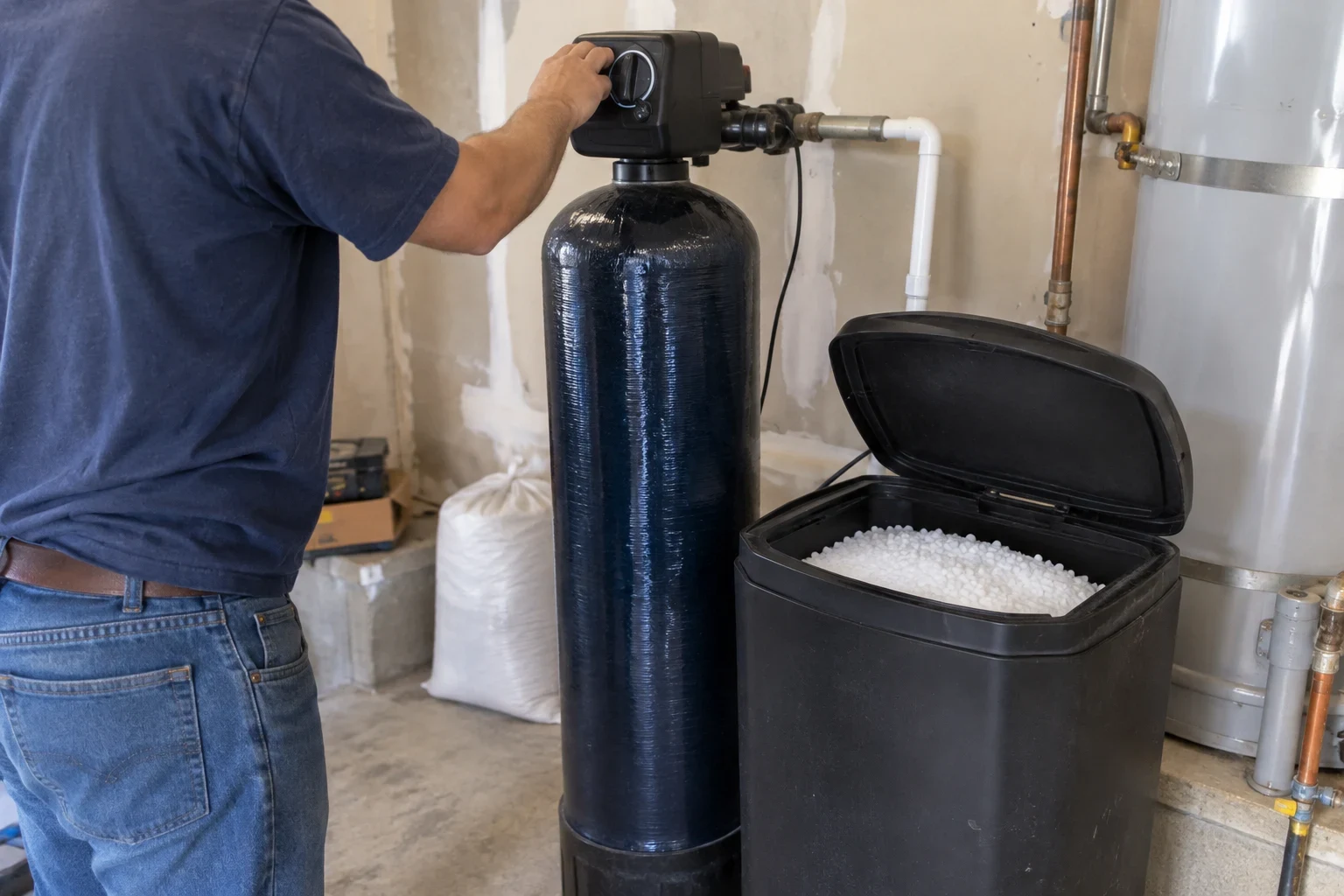
Inside a softener, a tank of resin beads grabs calcium and magnesium as water passes through and swaps in sodium or potassium. Calcium and magnesium are what build crust in your pipes, on the shower glass and inside your appliances. Take them out and soap lathers with less effort, fixtures stay clean longer and the water heater stops collecting scale.
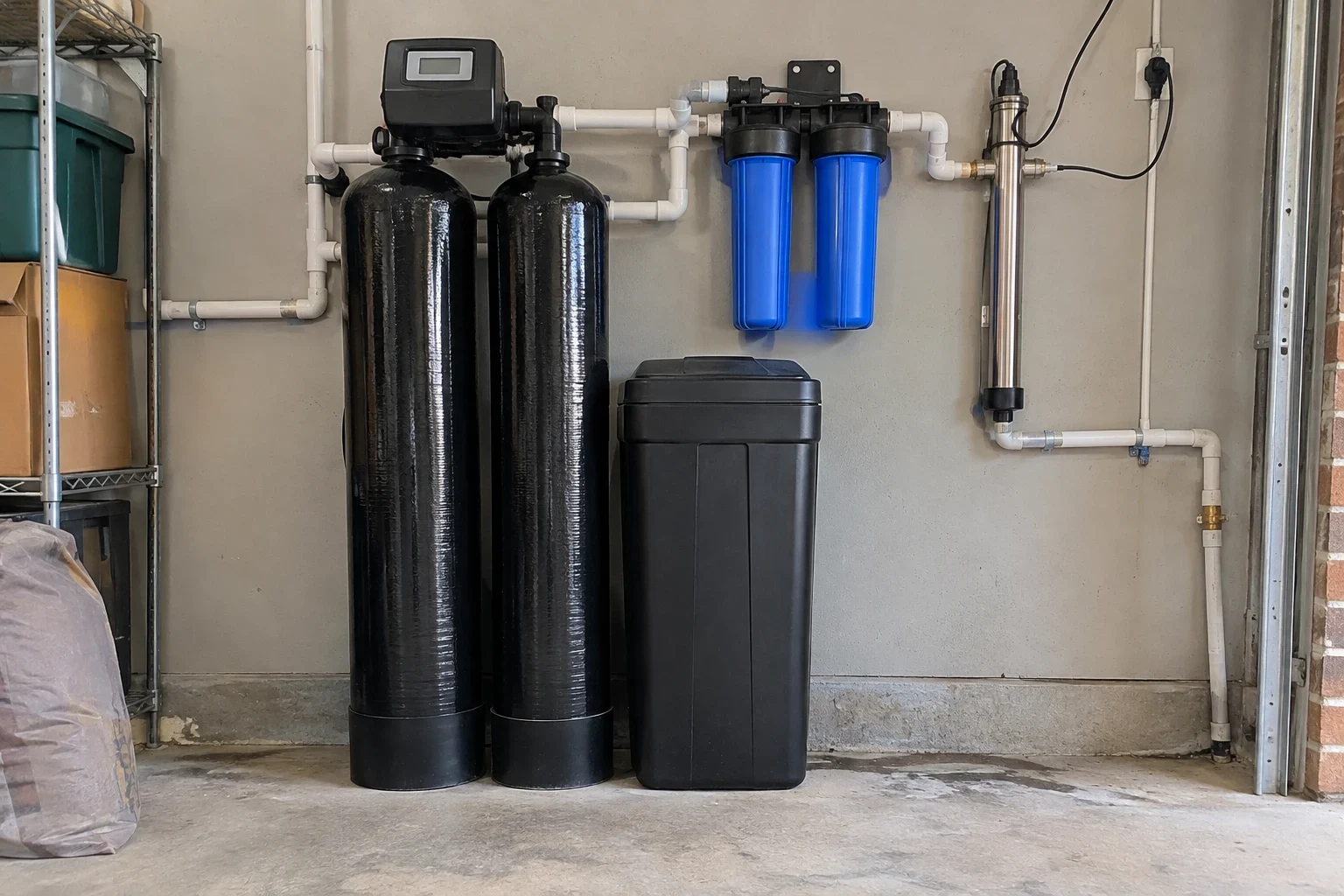
Softening and filtering are two different jobs. A softener does nothing for water that tastes or smells like chlorine. Whole-home filtration handles that. That's why we test your hardness before we recommend anything. If the reading comes back low, we'll tell you plainly and point you to the equipment that will actually help.
Water Filtration Webster is NSF Certified. We put the system in, set it for the way your household uses water and keep looking after it with full services after the sale.
What comes with a softener install
- 01
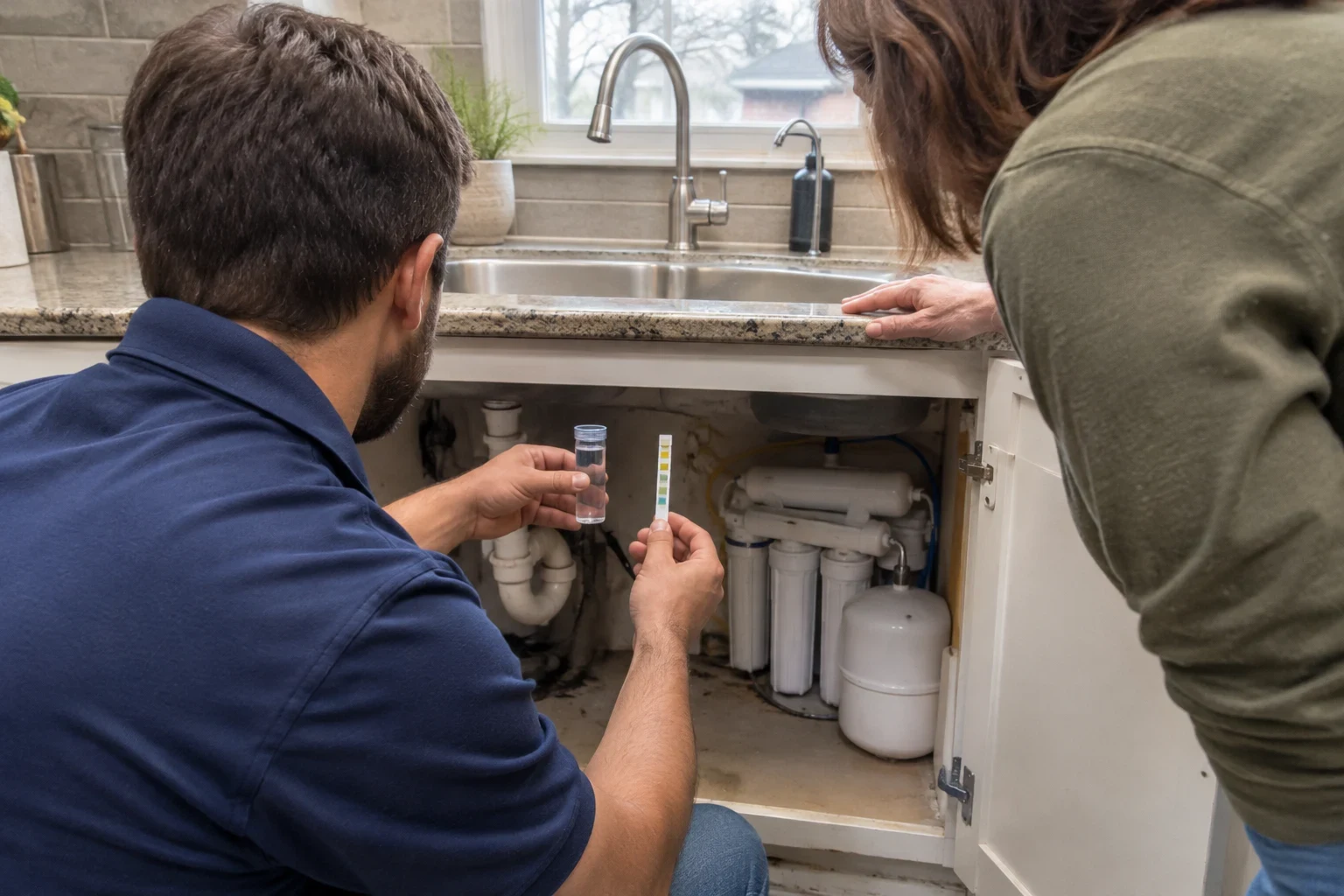
A hardness test first
We measure the hardness at your tap before any talk of equipment. That number decides the size of the unit and how often it should regenerate.
- 02
Sizing to your household
Grain capacity depends on hardness and how many people use water in your home. Too small and it regenerates constantly. Too big and you paid for capacity you never use.
- 03
Free installation
Installation is free. That covers tying into your main line or the softener loop, adding a bypass valve, running the drain line and setting the control valve.
- 04
Brine tank setup
We fill and set the brine tank and show you what salt to buy and how full to keep it. In a humid garage, salt can clump into a bridge, so we show you how to check for it.
- 05
Full services after the sale
We don't disappear once the unit is in. If settings need changing, the resin needs attention or something stops working, you call the same people who installed it.
Questions about Water Softeners?
Call(281) 519-3631Signs your home could use a softener
Chalky buildup that keeps coming back
If faucets and showerheads grow a white, gritty ring again a few days after you scrub them, that's mineral scale. It's a good sign your water is hard.
Cloudy glasses and spotted shower doors
When water dries, the minerals stay behind. You see it as a haze on glassware from the dishwasher and dots all over the shower glass.
Soap that barely suds up
Minerals in hard water work against soap. You end up using extra shampoo and detergent, and your skin may feel dry after bathing.
Sounds from the water heater
Crackling or rumbling while the tank heats usually means hard water sediment has piled up on the bottom. The heater then burns more energy to do the same work.
An older softener misbehaving after a storm
A power outage can throw off the control valve clock, so the unit regenerates at odd hours. If floodwater got into the brine tank, the salt has to come out and the tank needs cleaning before you use it again.
How the work goes
- 1
You call and tell us what you see
Describe the crust, the spots or the trouble with your current unit. We ask a few questions about your home and plumbing.
- 2
We test your water
We check hardness at your tap and look at where the unit would go. If a softener isn't the right fix, you hear that now.
- 3
You get a clear quote
We go over the size we recommend and why, and what is included. No add-ons you didn't ask for.
- 4
Install day
We shut off your water for a short stretch, tie in the softener with a bypass valve, run the drain, load salt and program the regeneration schedule. We clean up and show you how it works before we leave.
- 5
Follow-up
We check that the softened water tests where it should. After that, call us any time the unit needs service.
What moves the price
We include free installation, so most of what you pay is the softener itself. Which unit fits depends on your water and your home. We walk through each part with you by phone before you commit to anything.
- Your hardness level and how many people live there
- Harder water and a bigger household both mean the unit has to strip out more minerals every day. That calls for more grain capacity. Of everything on this list, this decides the model most.
- Timer or metered valve
- A metered valve tracks the water you actually use and regenerates only when it needs to. It costs more at the start than a simple timer, but it goes through less salt and less water over the years.
- The spot it goes in
- Some homes already have a softener loop plumbed in, which keeps the job simple. Without one, tying into the main line takes extra fittings and pipe.
- Adding other equipment
- Some homes do best with a softener plus whole-home filtration for chlorine, or a reverse osmosis unit under the kitchen sink. Each added piece changes the total.
Water softener questions
How can I tell if my water is hard enough for a softener?
A test answers that. Buildup and spots hint at it, but only the hardness reading settles it. If the reading is low, we'll tell you a softener isn't worth it. Our Water Testing page explains what else a test can turn up.
When will I need to refill the salt?
That comes down to how hard your water is and how much your household uses. For most homes, a quick look inside the brine tank once a month is enough, adding salt when it gets low. We'll give you a rough schedule for your home on install day.
Does a softener take care of chlorine taste?
It doesn't. A softener deals with hardness minerals and nothing else. Whole-home filtration handles chlorine taste and smell, and it can run alongside a softener just fine.
Can I drink softened water?
Yes, though it does pick up a little sodium. If you're cutting back on sodium, we can set the unit up to use potassium chloride instead of salt. You could also add a reverse osmosis system under the kitchen counter, so the glass you pour and the pot you fill come from a separate low-sodium tap.
My softener sat through a storm. What should I check?
After a power outage, look at the clock on the control valve and reset it if it's off. If water came into the garage and touched the brine tank, switch the unit to bypass and leave it off until the tank is cleaned out. Give us a ring and we'll talk you through it or come out to check it.
Find out if a softener is worth it for your home
Tell us what you're seeing and we'll set up a hardness test. You'll get a straight answer and a quote you can understand.