ServicesWater Testing
Water Testing in Webster
Find out what is really in the water at your tap before you spend money on a fix. We test city and well water, show you the readings and explain what they mean. After a storm or a sudden change, testing is the sensible first step.
Know your water before you buy anything
A water test shows what is actually flowing from the faucets in your home. We look at hardness, iron, chlorine, pH and dissolved solids, plus bacteria if you have a well. With real numbers in hand, the right fix tends to be obvious. Now and then the answer is that you need very little.
The best time to test is right after something changes. A Gulf Coast storm sends water across the yard and up around the well head. A boil-water notice goes out. Your water starts to smell, taste or look off. That's when people tend to buy the first system somebody shows them. We'd rather you have a real result and take your time.
Water Filtration Webster is NSF Certified. We test, explain what turned up in everyday words, and only bring up treatment if your water needs it.
What a water test from us covers
- On-site screening
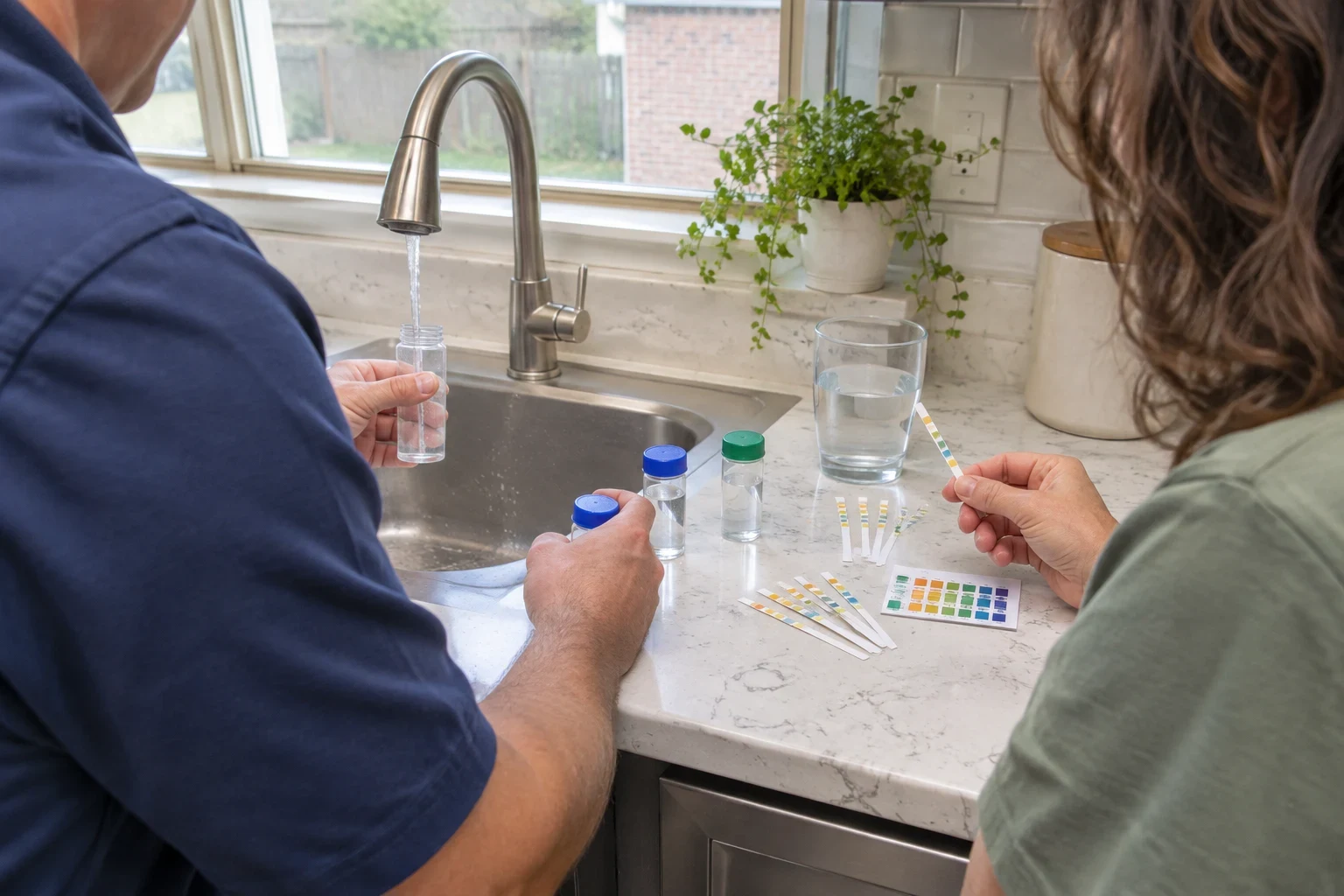
- We measure hardness, pH, chlorine, iron and total dissolved solids at a tap in your home. You can stand right there and see each number come up.
- Lab samples when it counts
- A meter or test strip can't pick up everything, like bacteria in a private well or lead from old fixtures. For those, we collect a proper sample and ship it to a lab.
- Well checks after high water
- If floodwater got to your well, we inspect the cap and seal for damage and test for coliform bacteria. You'll know if it's safe to drink before you start using it again.
- Results in writing
- Every reading gets written down, with a short note on what it means for your home. Hang on to it for your records or to compare with a later test.
- A straight recommendation
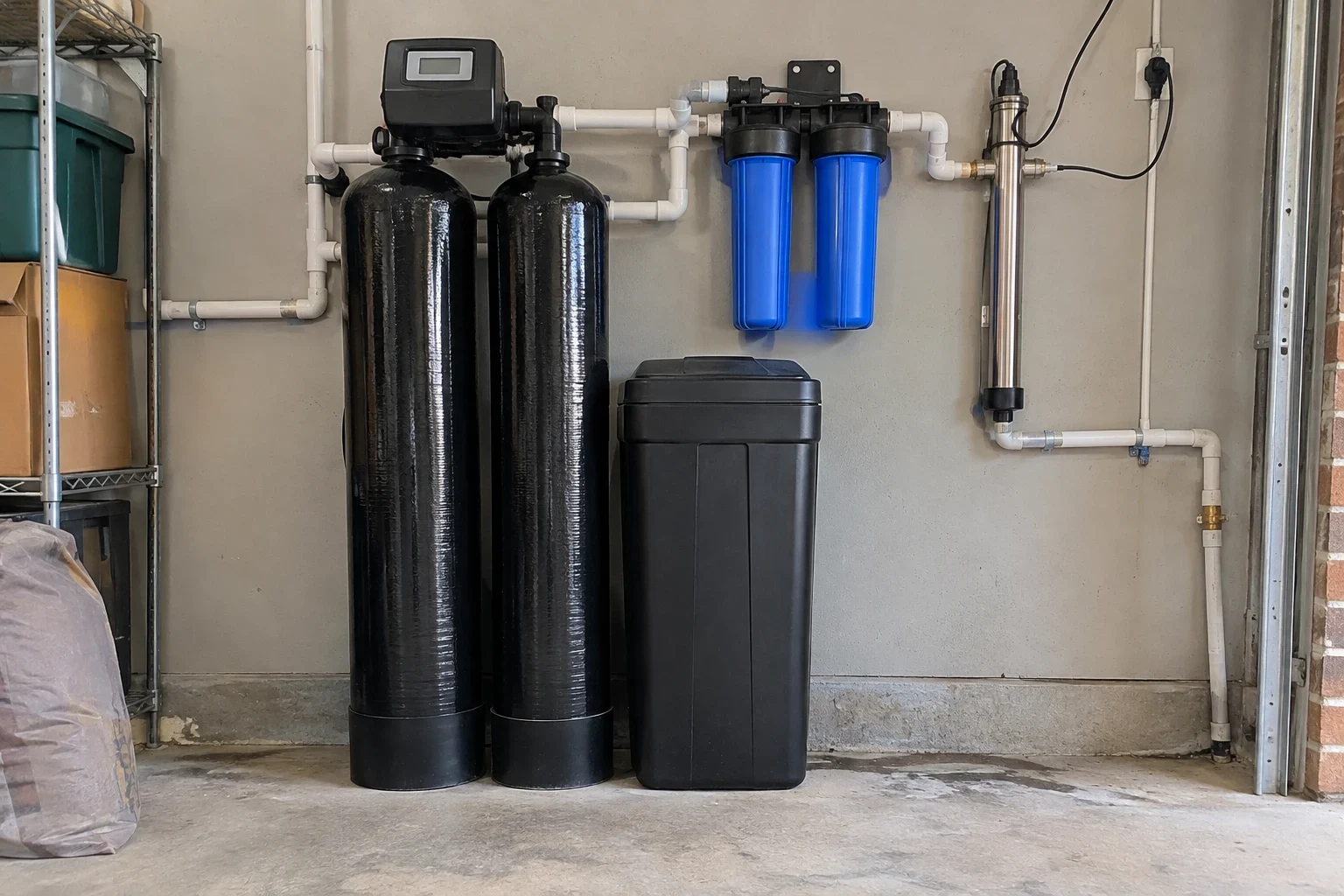
- If your water checks out, we tell you. If it needs work, we name the option that fits the result and explain why. That could be whole-home filtration, a water softener, reverse osmosis or well water treatment.
Signs it's time to test your water
Floodwater reached your well
Standing water around a well head can carry bacteria down into the water you drink. Test before you trust it again.
The water changed after a storm
Cloudy, off-color or odd-smelling water after heavy rain or a power outage is worth checking. It may clear on its own, or it may not.
Spots, crust and stains
White crust on faucets and shower heads points to hard water. Orange or brown stains in sinks and toilets usually mean iron.
A smell you can't ignore
A pool smell is usually chlorine from city treatment. A rotten-egg smell, common with well water, often means sulfur.
Older plumbing
Older pipes, solder and fixtures can add lead at the tap even when the water leaving the plant is clean. A lab test is the only way to know.
Someone is pitching you a system
If a salesperson recommends a softener or filter without testing your water first, get a test. It costs far less than the wrong equipment.
How a water test works
- 1
Start with a phone call
Tell us what you've noticed, if you're on city water or a private well, and if a storm or flood played a part. That tells us which tests make sense.
- 2
We come to your home
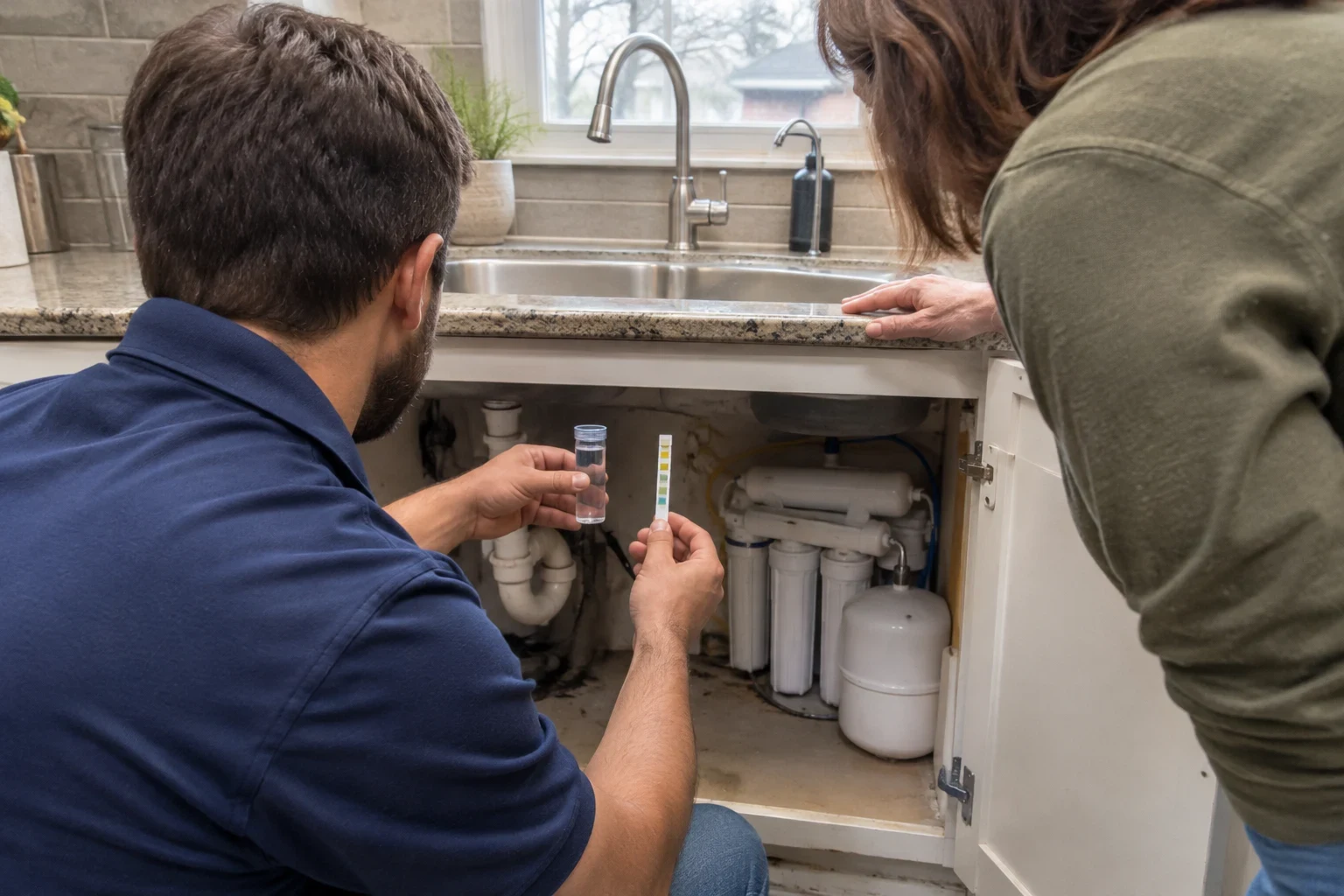
We choose the right tap, run the water the proper way for each test and take readings right there. If you have a well, we check the well head too.
- 3
Lab work if needed
For bacteria, lead or anything a field kit can't measure well, we seal up a sample and send it off. We'll give you an idea of when those results will be back.
- 4
We go over the numbers
We sit down with you, go through each result and answer your questions. What happens next is your call, and we won't lean on you.
- 5
Treatment only if you want it
If the results call for a system and you decide to go ahead, our crew handles the installation. After that, we stay on the job with full services after the sale, so filter changes and upkeep don't fall on you alone.
What moves the price of a water test
We don't set a price before we know what needs checking. The cost depends mostly on how many things we test for and whether a lab is involved. We'll go over it on the phone before we schedule, so the bill holds no surprises.
- How many things we test
- A basic screen for hardness, chlorine and pH is simpler than a full panel. We'll suggest only the tests that match what you're seeing.
- Lab analysis
- Bacteria and lead tests go to a lab, and that adds cost. For a well after a flood, it's money well spent.
- City water or a well
- Well water usually needs more checks, since no utility is treating it before it reaches your home.
- Follow-up testing
- A well that was disinfected after a storm needs a second test to confirm it's clean. Some people also retest after a new system goes in to see the difference.
Water testing questions
Something not covered here? (281) 519-3631
How soon after a flood should I test my well?
Test once the water has gone down and you can get to the well head safely. Hold off on drinking from the well until a bacteria test comes back clean. A well that sat under water often needs disinfecting first, then a second test to confirm it worked.
Isn't city water already tested?
Yes. Your utility checks its water against federal and state rules and publishes the results every year in a water quality report. Those samples are taken before the water ever reaches your street. A test at your own tap picks up what your pipes, fixtures and water heater add on the last stretch. Most folks who call us have a taste, smell or spotting complaint, not a safety problem.
Do I need a water softener?
Maybe not. Hardness can differ from one house to the next, and a hardness test at your tap is the only real way to know. If the reading supports a softener, we'll show you the number behind it. If it doesn't, we won't sell you one.
Am I stuck buying something once the test is done?
Not at all. We lay out the results and tell you what we'd do if it were our house. Sometimes that means a filter or a softener. Other times it means nothing, or just checking again down the road.
Should I do anything before you arrive?
For a lead test, try not to run any water for a few hours beforehand, overnight if you can, since water that has sat in the pipes gives the truest reading. Leave any filter you already have in place so we see what actually reaches your glass. If you have a recent utility notice or older test results, keep them handy for us.
Find out what's in your water
One phone call gets a test on the calendar. We'll ask a few quick questions so we test for the right things and nothing extra.