ServicesWell Water Treatment
Well Water Treatment in Webster
Your well water should run clear, smell like nothing and be safe to drink. We test it first, then put in only the equipment that fixes what the test found. After a storm or high water, we help you get the well checked and back in use.
Fixing the water your well actually gives you
Nobody tests a private well for you. That job falls to the owner. The common troubles are iron, a sulfur smell, hardness, sediment and bacteria, and many wells have two or three at once. Each takes a different fix, so we don't recommend equipment until we know what's in your water.
Storms can change a well overnight. Floodwater over the wellhead, or hard rain seeping down a cracked casing, can carry bacteria in. Along the Gulf Coast it pays to check after any big storm. We walk you through the steps in order: stop drinking it, test it, disinfect it, then treat it.
Every system we put in is NSF Certified. Installation is free. We also provide full services after the sale, so filter changes, bulb swaps and questions down the road come back to us instead of landing on you.
What well water treatment includes
- A test before anything else
- We check what matters on a well: bacteria, iron, manganese, hardness, pH and sulfur. If you want a full lab report, our water testing service covers it.
- Iron and sulfur removal
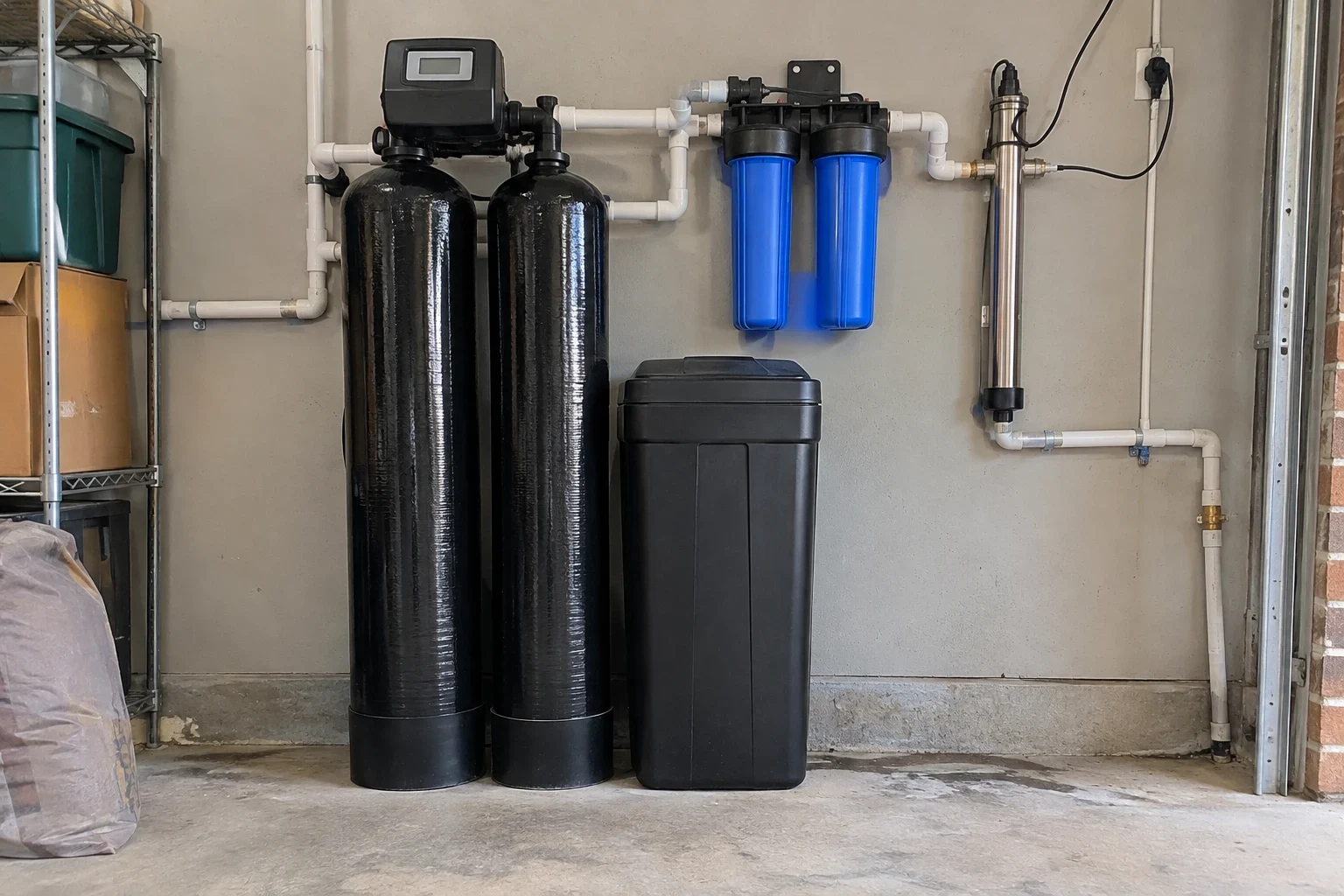
- Orange stains and a rotten egg smell are the two complaints we hear most. An oxidizing filter pulls both out before the water reaches your faucets.
- Sediment filtration
- Sand and grit wear out valves, water heaters and fixtures. A sediment filter at the front of the system catches it first.
- UV disinfection
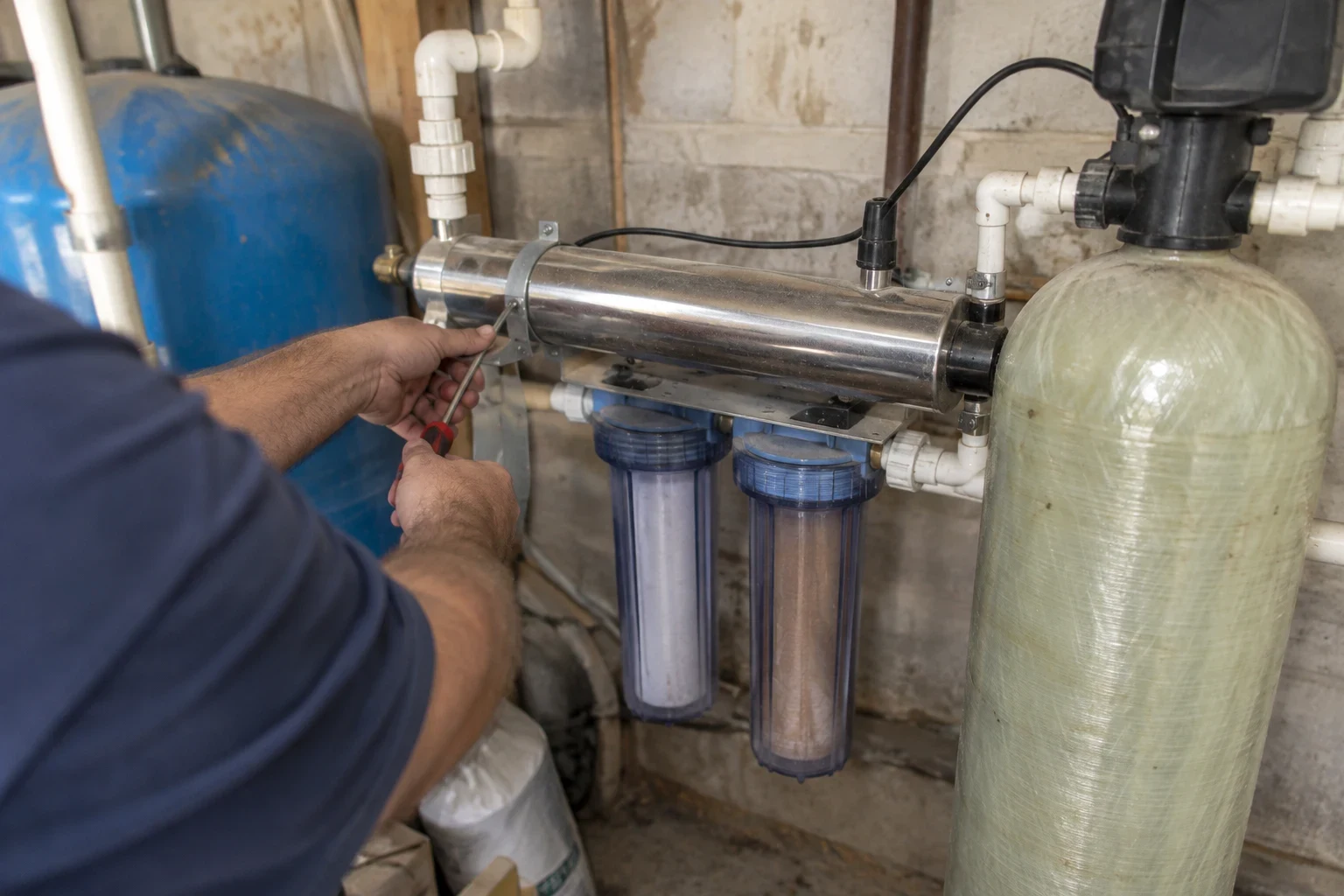
- A UV light kills bacteria as water passes through, with no chemicals added. It's a solid backstop for any well, and a smart one for a well that has taken on storm water.
- Softening only if the test calls for it
- Some wells run hard and some don't. If yours does, we add a softener after the iron filter. If it doesn't, we leave it out. Our water softeners page explains more.
- Disinfecting a flooded well
- If your well has been under water, we shock it with chlorine, flush it out and retest before you go back to drinking from it.
Signs your well needs treatment
Rotten egg smell
That's hydrogen sulfide. It's often worse from the hot side and first thing in the morning.
Orange or brown stains
Iron leaves rust marks in toilets, tubs and on laundry. Black spots usually mean manganese.
Cloudy or gritty water after rain
If the water changes after a heavy rain, surface water may be getting into the well. That needs a bacteria test, not just a filter.
Floodwater reached the wellhead
Treat the water as unsafe to drink until it has been disinfected and tested clean. Use bottled water in the meantime.
Scale and spots
White crust on fixtures and spotty dishes point to hard water. A test tells you how hard and whether softening makes sense.
What moves the price
No two wells are set up alike. Your price depends on what the test turns up and how the plumbing around your well is laid out. Installation is free, so the cost covers the equipment and any plumbing changes it needs. You see every line before we start.
What the test turns up
Sediment alone can be handled with one filter. A well with iron, sulfur and bacteria needs several stages working in a row.
Iron and sulfur levels
Light levels get by with a smaller filter. Heavy levels call for larger tanks or a different filter type.
Household size and flow
More people and more bathrooms mean sizing the system up so pressure stays steady at every tap.
Room to work at the pressure tank
If the tank sits in a cramped corner or the pipe around it is aging, the install takes more fittings and more labor.
Flood recovery first
If the well took on floodwater, it may need shock chlorination and a round of extra testing before any treatment goes in.
How a well water job goes
- 1
We talk on the phone
Tell us what you're seeing, smelling or worried about, and whether the well took on water in a storm. We'll tell you what to do right now and set a time to come out.
- 2
We test the water
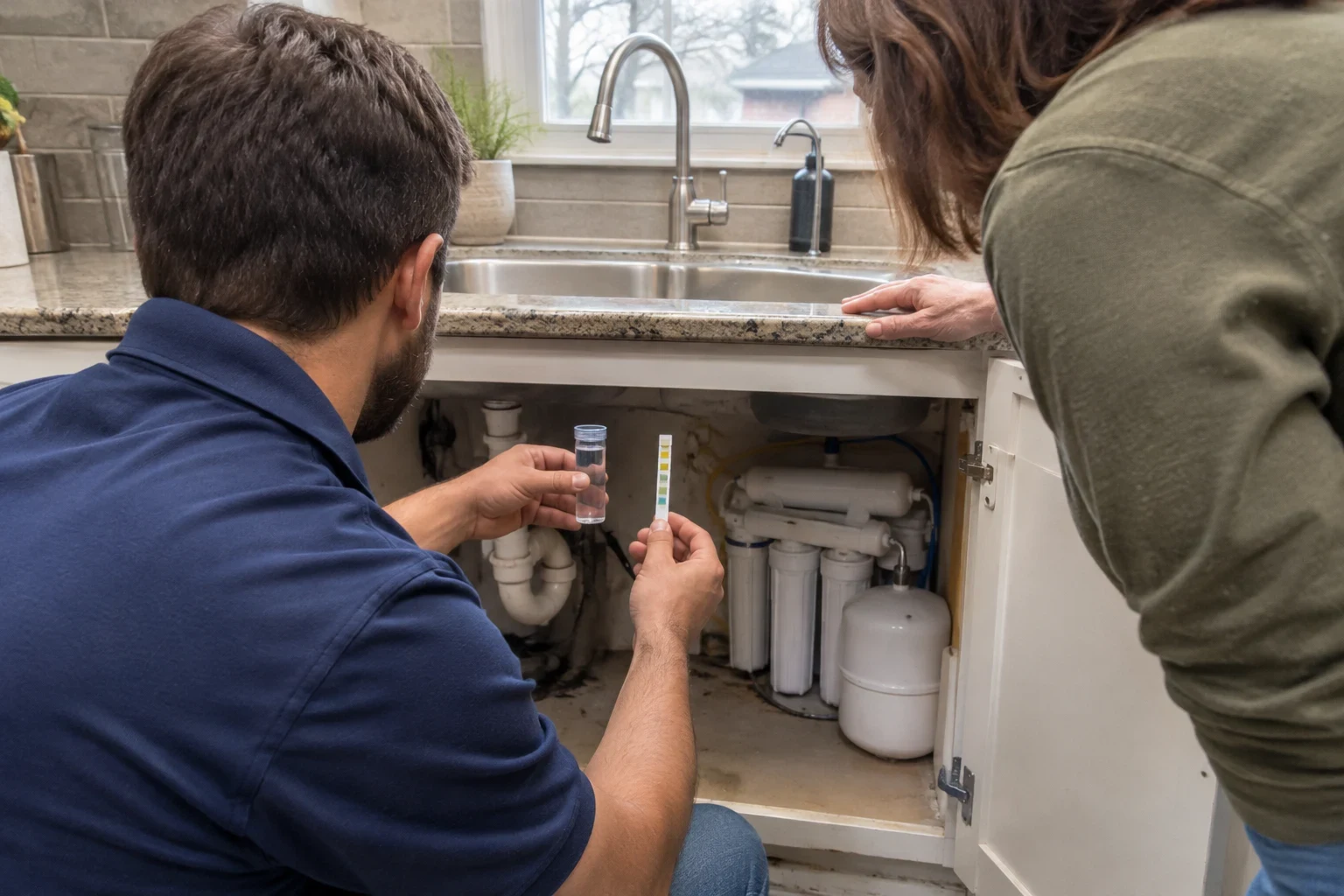
We take samples at the well and inside your home. You see the results and we explain each number in plain words.
- 3
You get a plan in writing
We lay out what each piece of equipment does and why you need it. If something on the list is optional, we say so.
- 4
Install day
Most installs take part of a day. We shut the water off for a few hours, mount the equipment near the pressure tank, add a bypass valve so you can isolate it, and clean up before we leave.
- 5
Retest and follow-up
Once it's running, we test again to make sure it's doing its job. After that, we handle filter changes and service when you need them.
Questions about well water
Can I drink from my well after it flooded?
Hold off until it tests clean. Floodwater can carry bacteria into a well even when the water from the tap looks normal. Use bottled water for now. Give us a call and we'll disinfect the well, then retest before you drink from it again.
How often does a private well need testing?
We suggest a test every year. Add one any time the taste, smell or color changes. And always test after high water comes close to the wellhead.
Will a treatment system cut my water pressure?
A properly sized one shouldn't. We measure your flow first and pick equipment that keeps up with it. That's part of why we look at your test results and your plumbing before we suggest anything.
What maintenance should I expect?
That depends on the equipment. Sediment cartridges need changing, UV bulbs are usually swapped about once a year, and many iron filters backwash automatically. Since we provide full services after the sale, we keep track of that for you.
Will I also need a softener or reverse osmosis?
Only if the test gives a reason. Some homeowners add reverse osmosis at the kitchen sink for drinking water after the whole house is treated. If you can do without it, we'll tell you.
Get your well water sorted out
Whether it's a smell that won't go away or a well that sat in floodwater, start with a call. We'll tell you what to do first and set up a test.