ServicesWhole-Home Filtration
Whole-Home Filtration in Webster, TX
We install a filter on your main line, right where water comes into the house. The kitchen, the showers and the washer all draw from treated water after that. You get less chlorine taste and smell, less grit, and a system that keeps working when the power drops. Installation is free.
What a whole-home system does
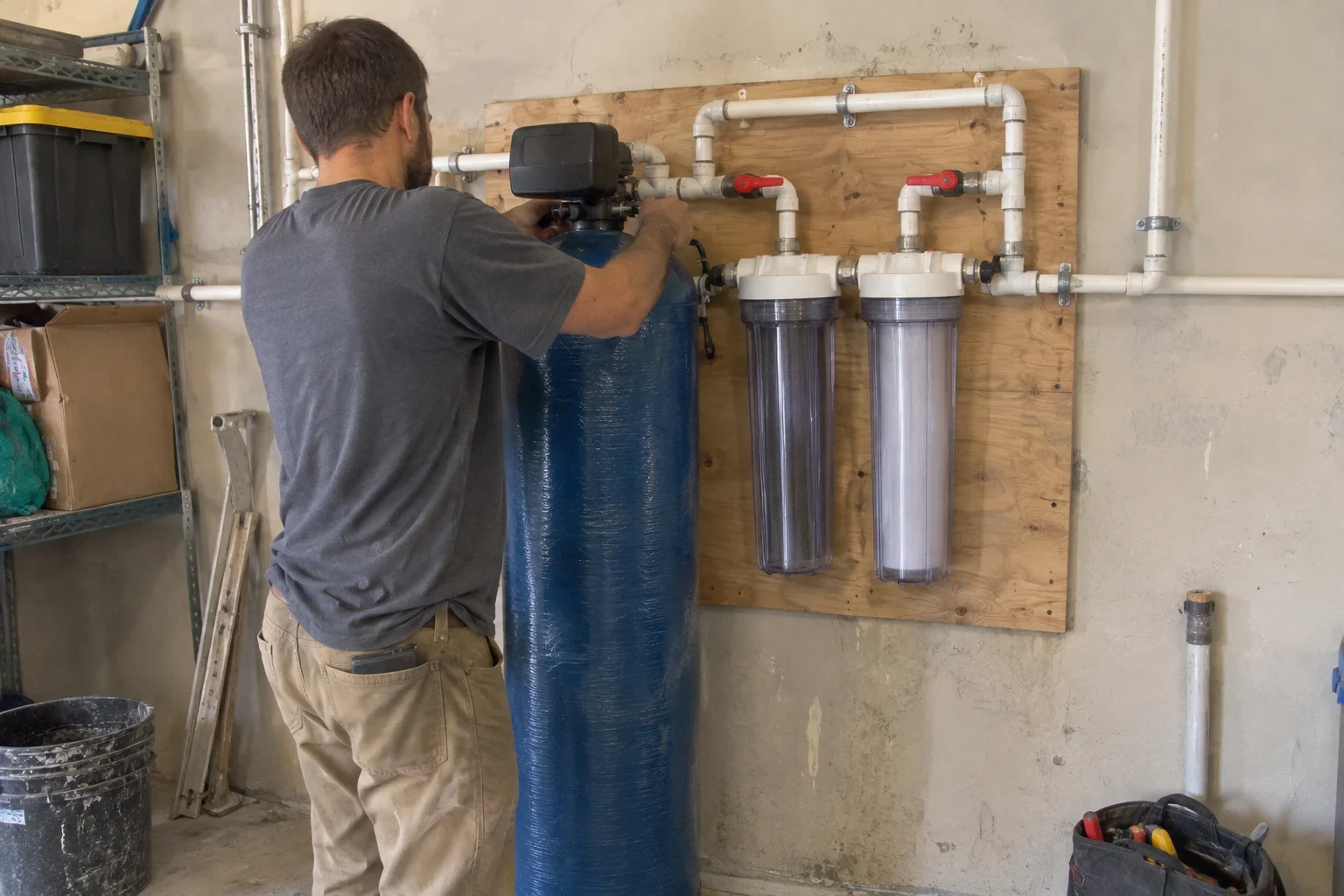
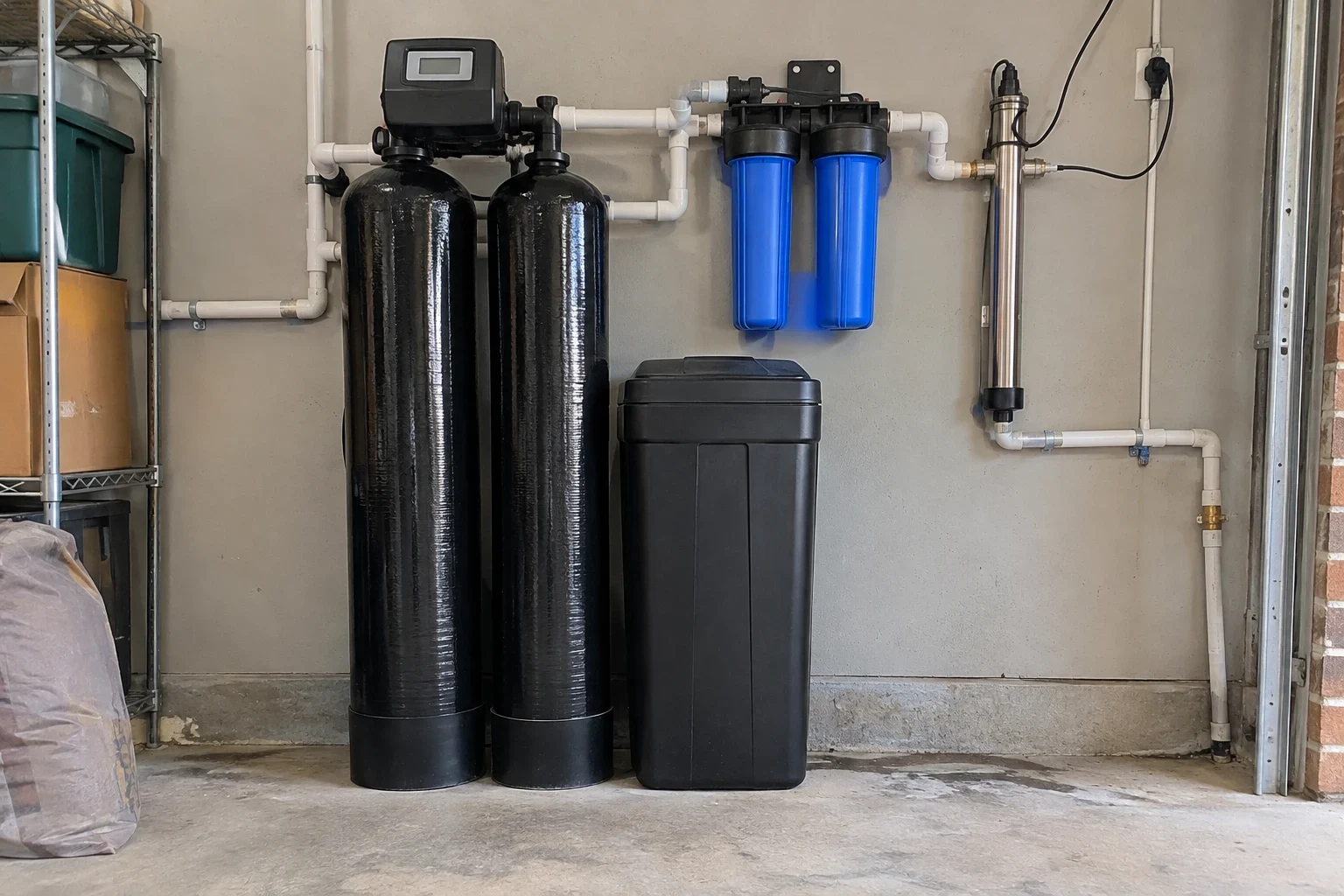
A whole-home system sits on your main water line, usually where it comes into the garage or along an outside wall. Water runs through a sediment stage first, then a bed of carbon, before it reaches any faucet. The sediment stage catches grit and rust flakes before they settle in your water heater. The carbon pulls out chlorine, along with the pool smell and flat taste it leaves behind.
This makes sense when the whole house bothers you, not just the glass at the kitchen sink. Showers that smell like a pool. Gritty faucet screens. If drinking water is your only worry, an under-sink reverse osmosis unit may do the job for less. We will tell you which one fits.
Heavy rain and hurricanes are part of life on the Gulf Coast. After a big storm, city water can run cloudy for a while once service settles down. A sediment stage handles that, and most carbon systems need no power, so they keep working through an outage.
What you get with the install
- A water check before sizing
- We look at chlorine, hardness and sediment first, so the system matches what is actually in your water. If the numbers point to a softener instead, we say so. For a full lab panel, see Water Testing.
- Sediment prefilter
- This catches sand, scale and rust before it reaches the carbon. That keeps the carbon working longer and protects your fixtures.
- Carbon tank sized to your flow
- We size it to the number of bathrooms and people in your home. That way pressure holds when the shower and the washer run at the same time.
- Third-party tested equipment
- The filtration systems we install are NSF Certified. That means an outside group has checked how the filter performs, not only the company that built it.
- Bypass valve and a clean job
- We add a bypass so the filter can be serviced without shutting off the house. Installation is free, and we clean up before we leave.
- Full services after the sale
- Filter changes, questions, a look at the system after a big storm. You have one number to call, and it is ours.
Signs your home needs whole-home filtration
Chlorine smell in the shower
If the bathroom smells like a pool when the hot water runs, carbon on the main line fixes that for every faucet at once.
Grit in screens and toilet tanks
Sand or dark flakes in faucet aerators mean sediment is moving through your pipes. It ends up in your water heater too.
Water stays off after a storm
If the water still looks cloudy or tastes odd days after service is back, a sediment and carbon system helps going forward. During an active boil-water notice, follow the notice. A filter does not replace boiling.
Floodwater reached your old filter
If your existing equipment sat in floodwater, the cartridges and media need to go and the housings need a look. We can replace the parts or the whole system.
Popping from the water heater
That sound is often sediment built up in the bottom of the tank. Stopping it at the main line keeps it from getting worse.
What moves the price
Every house is plumbed a little differently, so we give you a number after we have seen yours. Installation is free. The cost comes from the equipment and the filter media. Here is what pushes that number up or down.
How much water runs at once
A house with three or four baths and a full family can have two showers and the washer going together. That takes a bigger carbon tank, or the pressure sags at the far end of the house.
Cartridges or a tank
Cartridge housings cost less up front, but the cartridges get swapped more often. A backwashing tank holds out longer between media changes. It may also need a drain and an outlet within reach.
Where your main line comes in
A main line in an open garage spot is quick work. One on an outside wall may need a cover to keep sun and weather off it, and an awkward pipe run means extra fittings.
What your test results show
Hard water or another problem in the results can mean a second stage. We add equipment only when the numbers call for it.
How the job goes
- 1
Start with a phone call
Tell us what you notice, how many bathrooms you have and anything storm-related going on. We set a time to come out.
- 2
Test and look at your plumbing
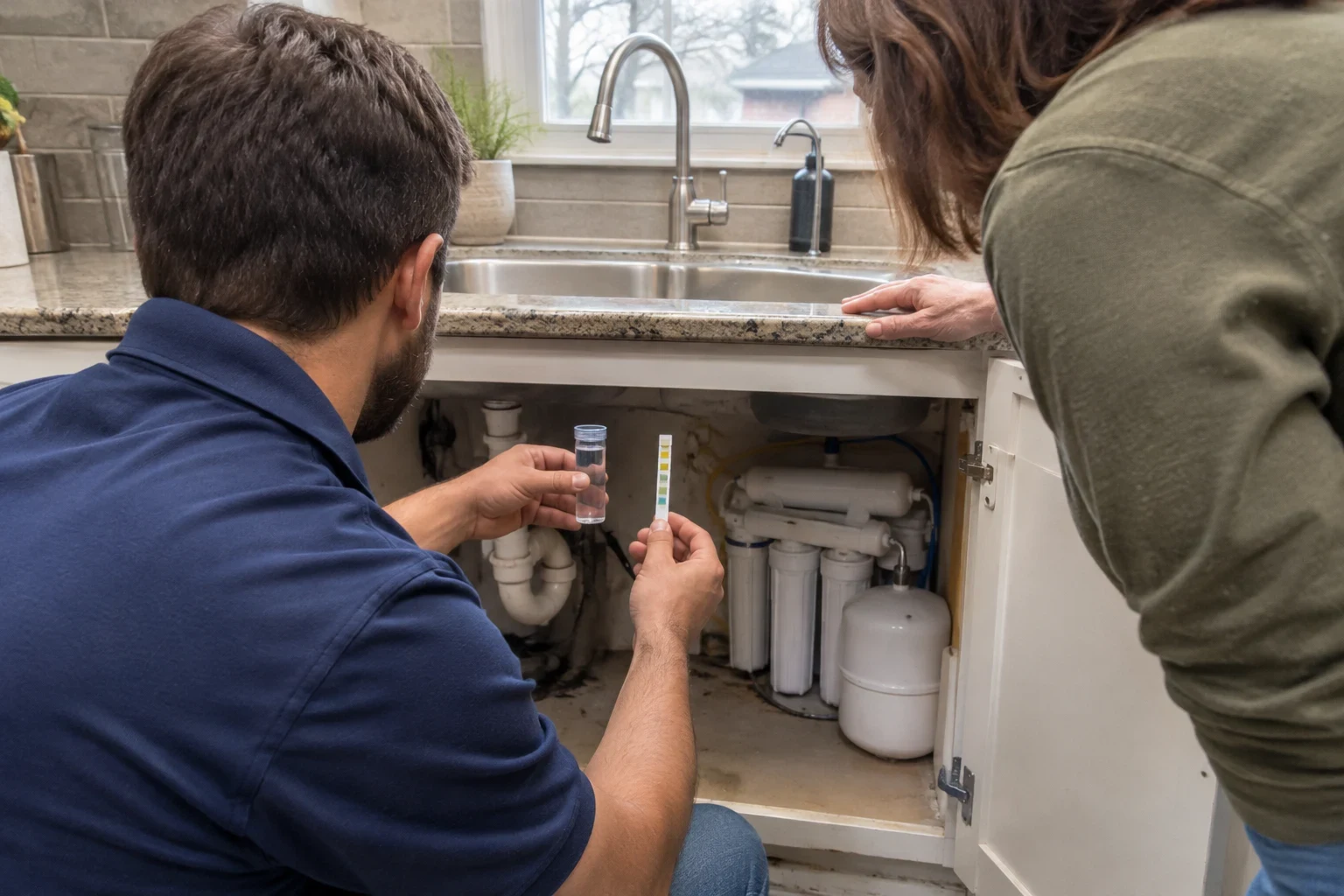
We check your water and find where the main line enters. We look at the space, the pipe size and whether there is a drain and outlet nearby, since some tank systems need both.
- 3
Install day
Most installs take part of a day. We shut the water off for a short stretch, cut in the system with a bypass, then flush the new media until it runs clear. We check every joint for leaks and lay drop cloths where we work.
- 4
Walkthrough before we leave
We show you the bypass, how to tell when a filter needs changing and what to do after heavy weather or a power outage. Then we keep you on our schedule for service.
Whole-home filtration questions
Is my water pressure going to drop after the install?
Not if the system is the right size. Weak pressure usually comes from a tank that is too small or a cartridge packed with grit. We match the tank to how much water your house pulls at the same time, and we show you how to spot a cartridge that is due.
Can I skip boiling if I have a whole-home filter?
No. Carbon is made for taste, odor and chlorine, not for killing germs. Keep boiling until the notice is lifted. After that, the sediment stage helps clear up cloudy water, and we can swap a cartridge that filled up during the event.
Does the filter stop working during a power outage?
Cartridge housings and most carbon tanks run on water pressure alone, so they keep filtering with the lights off. A tank with a timed backwash head may need its clock set again once power returns. We walk you through that on install day.
Will a whole-home system take care of hard water too?
It will not. Carbon removes chlorine, taste and smell, but it leaves the minerals behind. If your test shows hardness, we can go over Water Softeners with you, and both can sit on the same main line.
Should I add reverse osmosis at the kitchen sink?
Many families are happy with the whole-house system alone. Others want an extra step for the water they drink and cook with, and a Reverse Osmosis unit under the sink works well alongside it. We will tell you honestly whether it is worth it for your home.
How often will I need to change filters?
That depends on your water and how much your household uses. Sediment cartridges clog quicker after heavy storms, while carbon media lasts a good deal longer. With full services after the sale, we help you stay on top of it.
Better water at every tap
Tell us what you are seeing at the faucet or in the shower. We will come test your water and size a system that fits your home.